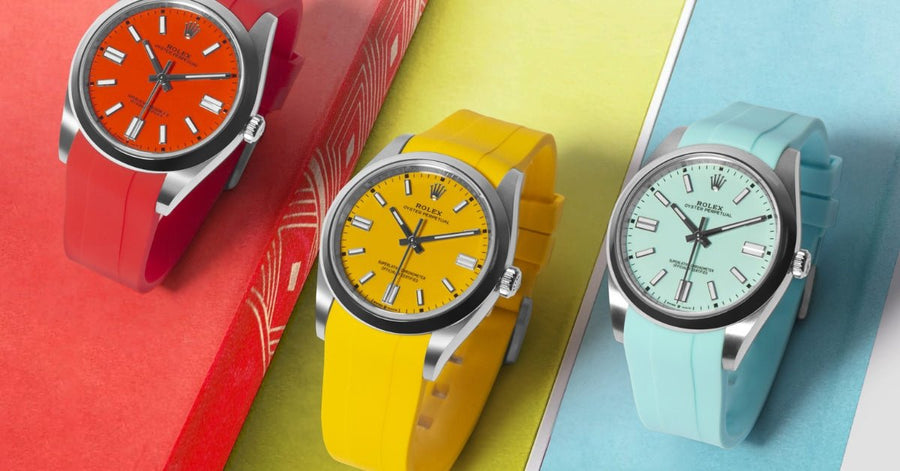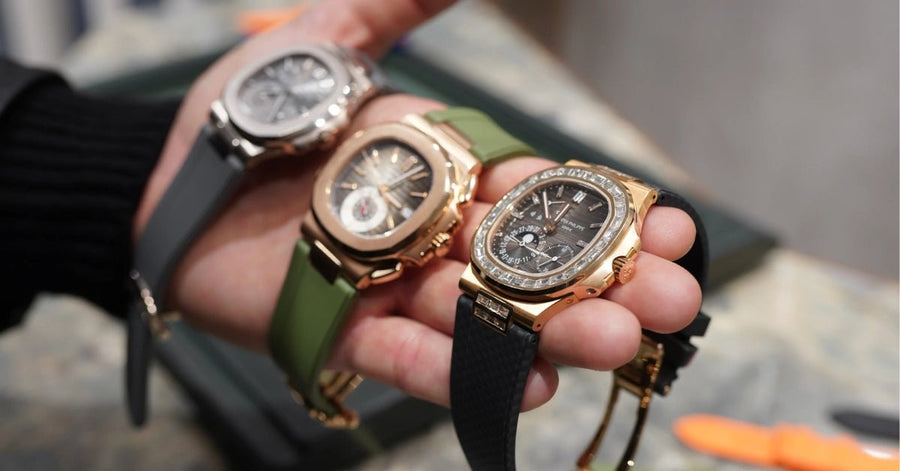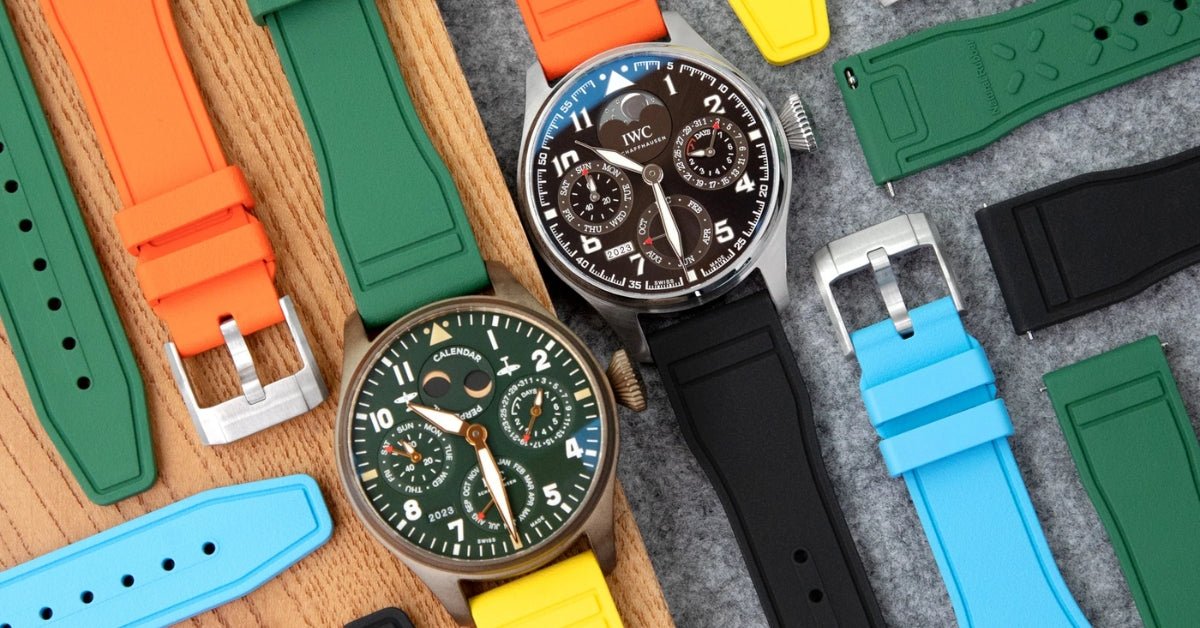
A common pattern shows up in luxury watch ownership. Someone buys a Rolex, a Cartier, a Patek, an AP, a Tudor — pick any of them. They wear it for a year on the original bracelet. They eventually buy one aftermarket strap, usually rubber, often for summer. They love it. They buy another one a few months later, maybe leather. Then a sailcloth, then an alligator, and suddenly four years in they have a small but considered wardrobe of straps and the same watch they bought wears differently five days a week.
This guide is for the person at any stage of that journey — including the person at the start of it. It covers what a strap wardrobe actually does for you, the four-tier framework (1, 3, 5, and 7 straps), the order in which to buy them, the watches that benefit most, the watches where one strap is genuinely enough, and the budget reality of building this out properly. There's no "you need to own twelve straps" pitch here. Most people are correctly served by three to five straps. The point is choosing the right three to five.
Why a Strap Wardrobe Beats a Watch Collection (For Most People)
Watch collecting is glorious and expensive. Adding a second luxury watch to the rotation typically costs £5,000–£50,000 and creates the new ongoing problem of dividing your wrist time between two beloved objects. Adding a strap wardrobe to a single watch costs £100–£800 total and produces a similar variety effect — the same watch, four or five different personalities depending on which strap is on it.
The argument for strap wardrobes specifically:
The watch you already own becomes the watch you wear. Most luxury watches sit in a safe much more than they sit on a wrist, because the OEM bracelet doesn't suit every situation. Rubber for summer and water, leather for office and dress, sailcloth for casual weekend — each strap unlocks a context the bracelet alone doesn't cover.
It extends the life of every strap in the rotation. A leather strap worn daily lasts 12–24 months. The same leather strap rotated with two others lasts 4–6 years. The rubber lasts longer still. Per year of useful life, rotation drops the cost-per-wear of every strap by 50–70%.
Strap wardrobes don't depreciate the way watches do. A £200 leather strap stays roughly worth £100 in the resale market for years. A £200 watch loses 60% of its value the day you walk it out of the boutique. The relative economics of "spend £600 on three straps" versus "spend £600 on a second-tier watch" heavily favour the straps for almost everyone.
The variety arrives faster. A new strap arrives in 3–7 days. A new luxury watch can take months or years (Rolex waiting lists, Patek client cultivation). For most people, the straightforward path to "more variety on my wrist" is more straps, not more watches.
This isn't an argument against owning multiple watches — most serious collectors do both. It's an argument that for the 80% of luxury watch owners who will only ever own one or two watches, building a strap wardrobe is the highest-leverage move available.
The Threshold Question: Is Your Watch Worth a Wardrobe?
Not every watch benefits equally from rotation. The watches that benefit most are versatile sport-and-luxury hybrids — watches that genuinely live across multiple registers (office, weekend, beach, dinner). Watches with very narrow appropriate-use windows benefit less.
Strong wardrobe candidates: Rolex Submariner, GMT-Master II, Daytona, Datejust, Day-Date, Yacht-Master, Sea-Dweller. Cartier Santos, Pasha. Omega Speedmaster, Seamaster. Tudor Black Bay (all sizes), Pelagos. Patek Aquanaut, Calatrava. AP Royal Oak Offshore. IWC Pilot, Big Pilot. Panerai Luminor, Submersible. Tag Heuer Carrera, Aquaracer. Hublot Big Bang.
Moderate wardrobe candidates: Most Rolex Explorer, Air-King, Milgauss references. Cartier Pasha, Calibre. Most Tag Heuer references. Tudor Royal, GMT-specific references.
Weaker candidates: Cartier Tank, Tank Louis, Tank Américaine, Tank Solo. JLC Reverso, Master Ultra Thin. Lange Saxonia. Patek Calatrava (more limited). Vacheron Patrimony. These are dress watches that genuinely belong on a single strap material (alligator or calf in a couple of dressy colours). A wardrobe of seven straps for a Cartier Tank is overkill — three is the realistic ceiling.
If your watch is in the first category, the rest of this article applies. If it's in the second, scale the wardrobe down by one tier. If it's in the third, stop at the 3-strap wardrobe and don't push beyond it.
The 1-Strap Starter
If you only buy one aftermarket strap for your watch, ever, this is the one to buy.
The pick: A premium FKM rubber strap, in black, with curved-end fit cut for your specific watch reference.
Reasons:
It works in more situations than any other single strap material. Rubber takes the watch into water, summer, sport, gym, beach, casual weekend, and most office days without complaint. Leather can't do water and struggles in heat. Sailcloth is more limited than rubber. Alligator is single-register only. Rubber is the most flexible single material on offer.
It cuts weight by 60–80% versus the OEM bracelet. The watch becomes daily-wearable in a way it might not currently be.
It protects the OEM bracelet from accumulated wear. The bracelet stays fresh for the days it's truly needed.
Black is the most flexible colour. It works with every dial colour and every case metal. Curved-end is the most refined fit on most luxury sport watches.
Budget: £120–£250 for premium FKM from a serious aftermarket maker, depending on construction. Helvetus's curved-end FKM rubber range is engineered specifically for over 25 luxury watch brands.
When one strap is genuinely enough: Owners of dress watches (Cartier Tank, JLC Reverso, Lange Saxonia) who don't need a sport register and who'll always wear their watch on alligator or calf. For these owners, one really good leather strap in the right colour is the entire wardrobe — and rubber would be wrong on their watch anyway.
The 3-Strap Wardrobe (The Sweet Spot)
For most luxury watch owners, three straps is the wardrobe that covers 90% of real-life situations and is the right plateau to settle on if you're not actively building further.
The picks:
- Premium black FKM rubber (curved-end for your watch). The sport, water, and weekend strap.
- Calfskin leather in black or dark brown, with a tang buckle. The office, dress-casual, and evening strap.
- Sailcloth in navy or charcoal. The in-between strap for travel, smart-casual, and the days you want texture without committing to leather or rubber.
This combination covers virtually every register a single watch will face. The rubber handles water, sport, summer, gym, casual. The leather handles office, formal-casual, and evening. The sailcloth handles travel and weekend in colder weather plus the days where neither rubber nor leather feels right. There's no register a daily-wear watch sees that this wardrobe doesn't cover.
Why these three specifically:
The materials are deliberately diverse — synthetic, natural leather, woven technical fabric. Three strap materials cover different climate, weather, and activity envelopes.
The colours are deliberately conservative — black, brown, navy. This is the foundation tier. Bright colours and exotic leathers come later.
The registers are deliberately spread — sport, formal, casual. No two of these straps overlap in use case.
Budget: £350–£700 total for premium-tier across all three. Roughly £150–£250 for the rubber, £80–£200 for the calfskin, £100–£250 for the sailcloth.
Where to buy first if you can only afford one at a time: Rubber, then sailcloth, then leather. Rubber gives the biggest day-to-day transformation. Sailcloth is the most underrated category. Leather can stay on the OEM bracelet's "dress occasion" register until the budget allows.
The 5-Strap Wardrobe (Building Beyond the Sweet Spot)
Three straps is enough for most people. Five straps is the next plateau — the rotation expands from "covers every situation" to "has personality and seasonal range." This is where casual wardrobe thinking turns into deliberate styling.
The picks (the three above plus two additions):
- Alligator in black or burgundy. The formal-evening strap. This is what you wear to an event, a wedding, a black-tie dinner — situations where calfskin reads as too daily and rubber is wrong. Alligator immediately elevates a watch beyond what calf can do.
- An accent-colour rubber or leather. This is the personality strap. Options worth considering: forest green (versatile, contemporary), oxblood/burgundy (autumn/winter, dressy), olive (vintage tool-watch), navy in a different material from your sailcloth (so you have both navy textures), or a deep tan calfskin that pulls warmth on a cool dial. The accent strap is the one that makes your watch look like a deliberate styling decision rather than a habit.
Why these two additions:
The alligator solves a genuine register problem the 3-strap wardrobe has — there's no truly formal option in the foundation tier. Calfskin and the OEM bracelet cover dress-casual to professional, but neither covers black-tie or "this is the most formal occasion this watch will see." Alligator does.
The accent strap is the move from "wardrobe" to "styling." A deliberately chosen 5th strap is what separates the wardrobe-builder from the wardrobe-haver. It's also the strap you'll get the most compliments on — accent colours and exotic leathers attract attention in ways foundation-tier straps don't.
Budget: £700–£1,400 total at premium tier across all five.
Order to buy: Rubber → sailcloth → calfskin → alligator → accent.
The 7-Strap Wardrobe (The Enthusiast Tier)
Beyond five, you're entering enthusiast territory. The marginal return on each additional strap drops, but the variety becomes genuinely impressive — same watch, different look five different days a week.
The picks (the five above plus two additions):
- A second rubber colour — usually navy, white, or a saturated accent (orange, racing green). Two rubber straps means rubber covers more occasions across the year.
- An exotic leather or specialty material — ostrich for distinctive texture, suede for autumn rotation, denim for weekend casual. This is the personality slot, the one that makes the rotation feel genuinely curated.
Why two more straps work:
A second rubber expands the rubber rotation from "I have a sport strap" to "I have sport straps for different moods and seasons." White rubber on a black-dial Submariner in summer is a completely different look from black rubber on the same watch in winter.
Exotic and specialty materials add registers that calf, alligator, rubber, and sailcloth don't reach. Ostrich pairs with vintage and dress-casual in a way no other material does. Suede shifts the entire register toward autumn and winter softness. Denim takes the watch into pure weekend territory.
Budget: £1,000–£2,200 total at premium tier across all seven.
Order to buy: Rubber → sailcloth → calfskin → alligator → accent → second rubber → exotic/specialty.
Beyond 7: The Diminishing Returns
The 10-strap, 12-strap, and 15-strap wardrobes exist among serious collectors, but the marginal return is real. By the time you have 10 straps in rotation, you're rotating through the wardrobe slowly enough that any individual strap gets worn 3–4 weeks per year. The lifespan benefit of rotation tops out around 5–7 straps.
If you have multiple watches, you can build dedicated 3–5 strap wardrobes for each — that's where 10+ strap collections start making sense. For a single watch, 7 is the practical ceiling.
The exception: if your watch is your single luxury watch and you wear it every day, expanding the wardrobe to 8–10 straps gives you genuinely different "outfits" most days of the year. That's a lifestyle decision more than a practical optimisation.
The Material Shopping List by Function
A reference table for which material does what, so you can build out the wardrobe based on your actual life rather than a generic template.
For sport, water, gym, summer, daily wear: FKM rubber. Curved-end or straight-end depending on watch reference. Black or dark colour for foundation, accent colour for personality.
For office, professional, smart-casual: Premium calfskin. Black for darker dials, brown/cognac for warmer dials. Tang buckle for dress, deployant for formal evening.
For formal evening, black tie, weddings: Alligator. Black for most situations, burgundy for dress watches that can carry colour, navy for blue-dial dress watches.
For travel, smart-casual, marine: Sailcloth. Navy or charcoal for foundation, lighter colours for summer rotation.
For autumn/winter rotation: Suede. Tan, brown, grey, or seasonal jewel tones (forest, burgundy, navy).
For vintage and statement pieces: Ostrich. Brown or tan for warm dials, black for vintage dress watches.
For pure casual/weekend register: Denim, NATO, or specialty fabric. Navy denim is the most versatile single specialty option.
If a wardrobe slot doesn't apply to your life — you don't go to formal events, you don't travel, you only wear the watch on weekends — skip that material. The wardrobe should reflect the situations you actually encounter, not a complete coverage of every possible situation.
Curating Across Multiple Watches
If you own two or three watches rather than one, the wardrobe approach changes. The principles still apply, but you don't need a 5-strap rotation per watch — many straps will work across multiple watches if the lug widths align.
The shared-rotation approach:
A 20mm strap fits any 20mm watch — Submariner, GMT-Master II (40mm), Speedmaster, Tudor Black Bay (most), Cartier Santos. If your collection is two or three watches all at 20mm, a single 5-strap wardrobe serves all three watches at once.
A 22mm strap fits any 22mm watch — IWC Big Pilot, Panerai (most), Tudor Pelagos, larger Tag Heuer Carrera and Aquaracer. Same principle.
The constraint: curved-end fit is reference-specific. A curved-end strap cut for a Submariner won't work on a Speedmaster. So a shared rotation usually means straight-end straps that fit any watch with the matching lug width. Curved-end pieces should be reserved for the watch they were cut for.
For mixed-width collections (a 20mm sport watch and a 19mm or 21mm Cartier), separate wardrobes per watch make more sense. The sport watch typically gets the sport-heavy rotation; the Cartier gets the dress-heavy rotation. There's some overlap (alligator, calfskin in matching widths) but most pieces commit to one watch.
Storage and Care
A wardrobe of straps requires somewhere to live. The cheap option: a small drawer with each strap laid flat. The better option: a watch roll or dedicated strap case with separate compartments. The premium option: a strap drawer with individual padded slots that prevent leather from creasing.
Care notes for a multi-strap rotation:
Rotate within the rotation. Don't wear the same strap 5 days a week even within a wardrobe. Spread the wear by alternating, or by tying strap to occasion (rubber for gym days regardless of the day of the week).
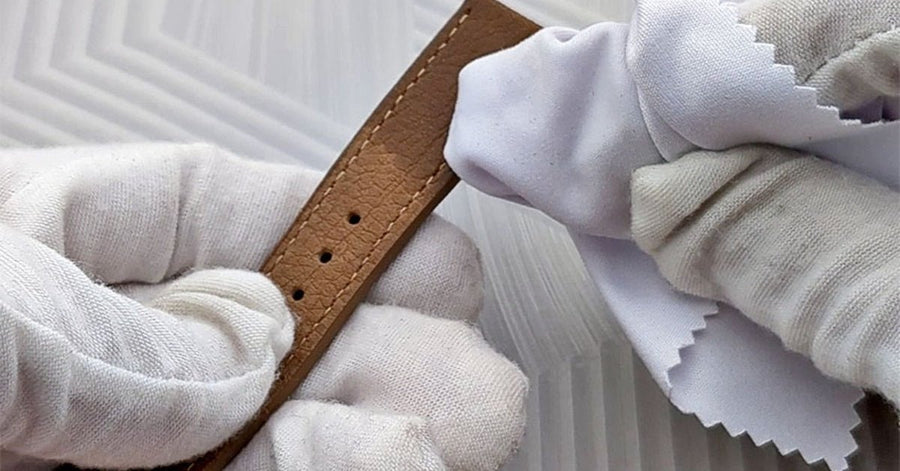
Clean before storing. Rubber and sailcloth get rinsed; leather gets wiped with a damp cloth. Storing a sweaty strap accelerates degradation, especially in leather.
Keep leather away from light. Direct sun fades leather. A drawer or closed case is fine.
Inspect every six months. Look for stretching at the spring bar holes (rubber/sailcloth), cracking at the strap end (leather), fading on the underside (any material). Catch problems early and they're solvable; ignored problems become "buy a new strap."
Frequently Asked Questions
How much should I budget for a starter strap wardrobe? £200–£300 for a single quality FKM rubber strap. £500–£800 for a 3-strap foundation wardrobe at premium tier. £1,000–£1,500 for a 5-strap wardrobe. Cheaper exists, but cheap straps fail faster and the per-year economics tip toward premium.
Should I buy all my straps at once or build the wardrobe over time? Build over time. Buying one premium strap, wearing it for a few months, and then deciding what's missing tells you more about your actual needs than buying a 5-strap set blind. Most owners discover their priorities differ from the textbook order — some never need an alligator; others realise they want two rubbers more than a sailcloth.
How many straps do most serious collectors actually own? For a single watch: typically 3–6. For a multi-watch collection: 8–15 spread across the watches. Beyond 15, you're either rotating across many watches or you've crossed into hobby territory.
Can I build a wardrobe for under £300? Yes, with one premium rubber strap (£150–£200) and one mid-tier leather strap (£60–£100). It's a 2-strap wardrobe rather than 3+, but it covers the two most important registers (sport + dress-casual) and is genuinely workable. Skip silicone, embossed calf, and other entry-tier shortcuts — they fail fast and the savings disappear within a year.
What's the most common mistake in building a strap wardrobe? Buying for situations you don't actually encounter. Owners buy formal alligator straps for "future formal occasions" that turn out to be twice a year, while the calfskin they actually wear daily wears out. Build for the wardrobe you actually use — the formal slot is the last to fill, not the first.
Should I match my strap wardrobe to my clothing wardrobe? Loosely. Strap warmth should align with the leather goods you already own (belts, shoes, wallet) — warm-tone straps work better if your accessories are warm-toned, cool-tone straps for cool wardrobes. You don't need exact colour matches, just compatible tones.
Is one quality watch with a 5-strap wardrobe better than two watches with no extra straps? For most people, yes. Two watches splits your wrist time and creates two single-mode objects. One watch with five straps gives you variety without dividing wrist time. The exception is collectors who genuinely love multiple watch designs — they should buy the second watch and accept that each gets less wrist time as the price.
How long should a strap wardrobe last me? A 5-strap wardrobe rotated properly should last 6–10+ years before any single piece reaches end-of-life. The rubber outlasts everything. The alligator and ostrich come second. The calfskin and sailcloth wear soonest, but rotation extends them substantially. Per year of useful life, a £1,000 wardrobe works out to £100–£150 per year — less than most people spend on a single year of phone case rotations.
The Bottom Line
A watch strap wardrobe is the highest-leverage upgrade most luxury watch owners aren't yet making. Three straps cover 90% of situations. Five straps add formal range and personality. Seven is the enthusiast plateau; beyond that, returns diminish. The order to buy them in is roughly fixed — rubber first (because it transforms how the watch wears), sailcloth or leather second (depending on whether your life is more casual or more formal), alligator fourth, accent piece fifth, second rubber sixth, exotic seventh.
The economic argument is strong. A £600–£1,000 strap wardrobe gives you four-to-five different watches' worth of variety on a single watch you already own, at a fraction of the cost of buying a second watch. The practical argument is stronger — the strap rotation is what turns a watch from "the thing in the safe I wear when it's appropriate" into "the thing I wear most days because I always have a strap for the situation."
If you're still on the OEM bracelet only, the right next strap is FKM rubber. If you have one rubber, the right next strap is sailcloth or premium calfskin. If you have three foundation straps, the right next strap is alligator. The wardrobe builds itself from there.
Helvetus offers premium straps in every material in this guide — curved-end FKM rubber and straight-end FKM rubber, CTS cut-to-size rubber, calfskin leather, alligator, sailcloth, suede, ostrich, and denim — engineered to fit the case profiles of every major luxury watch reference, with rubber straps backed by a lifetime warranty.
Most of our customers wear Rolex or Cartier. The Rolex strap collection is the most natural starting point for Submariner, Daytona, GMT-Master II, Datejust, and Day-Date wardrobes — every material in this guide is available cut to your specific Rolex reference. The Cartier strap collection covers Santos, Tank, Pasha, Ballon Bleu, and Ronde with the appropriate registers for each — including the dress-only watches where a 3-strap alligator/calfskin wardrobe is the right ceiling. Browse the full range at helvetus.com, use our Strap Finder to match the right wardrobe components to your specific watch reference, or read more on the Helvetus blog.