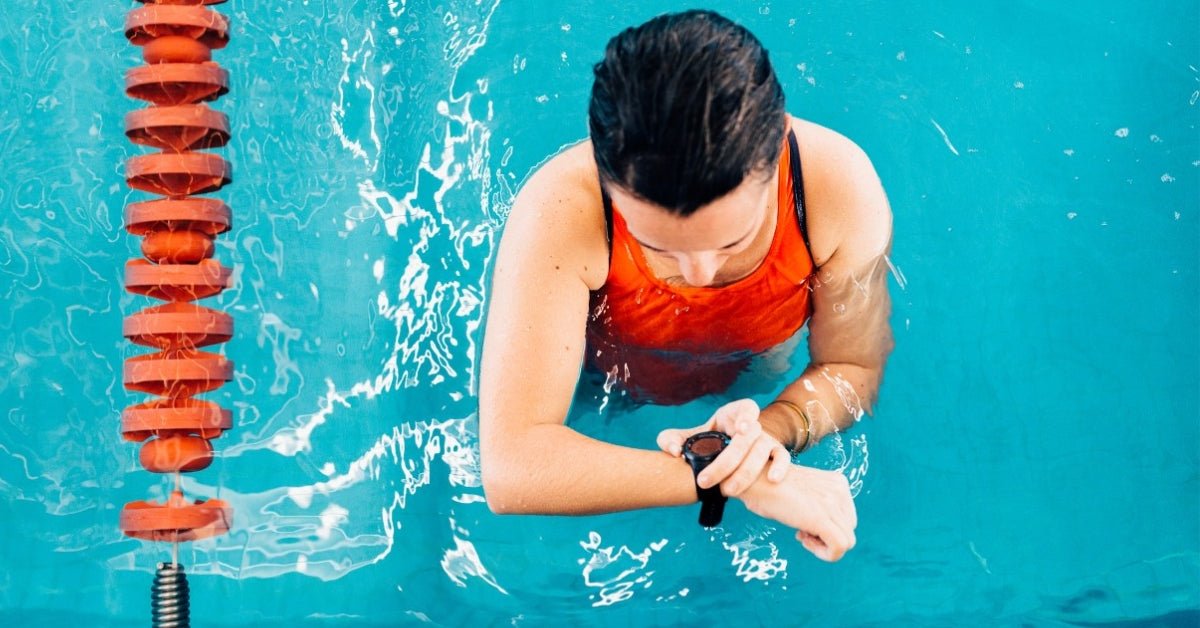
Most people check their watch's water resistance before they get in. Almost nobody checks the strap's.
It is the wrong way round. A modern dive watch is engineered to survive pressures you will never expose it to, and it will be fine. The strap is the part that actually suffers — and on leather, the damage concentrates in exactly the worst place: the holes where it attaches to the watch.
That is not a theoretical failure mode. It is why a leather strap that has been swum in a few times will eventually let go at the lug end rather than fraying somewhere harmless, and why the one component that keeps a watch on your wrist is the one you should think about hardest before a summer.
Here is what actually happens to each material, and what to wear instead.
What water does to each material
Leather. The worst option, and the failure is structural rather than cosmetic. Water swells the fibres, and repeated wetting and drying stiffens them. The attachment holes take the most stress and the most water, so that is where it gives. Salt water accelerates everything; chlorine does too. Leather in a pool is not a risk you are taking with the strap — it is a risk you are taking with the watch.
Woven fabric. Better than leather but with two problems of its own. A single-piece strap threads underneath the caseback, so after a swim you have a wet layer trapped between the watch and your skin for hours. Fabric also holds salt and chlorine in the weave, and pale fabric picks up a tidemark that does not come out.
Steel bracelets. Genuinely fine in water — but salt gets into the links and the clasp and stays there. If you swim in the sea in a bracelet, rinse the whole thing under a tap afterwards, clasp open.
Rubber. The one material designed for this. It does not absorb water, it does not stiffen, it rinses clean in seconds and it dries almost immediately. On a watch you actually swim with, it is not a compromise or a downgrade — it is the correct part.
Salt and chlorine are not the problem. Drying is.
This is the thing most people get backwards.
Swimming in the sea or a pool does almost no harm to a good rubber strap. What causes damage is letting salt or chlorinated water evaporate off it, repeatedly, without rinsing. Salt crystallises. Chlorine residue concentrates. Do that fifty times over a summer and even a well-made strap starts to look tired.
Thirty seconds under a tap removes the entire problem. Rinse the strap and the watch together — including the gap between the strap and the case, where water and salt sit longest — then dry it and move on. That is the whole maintenance routine for a summer of swimming.
Sweat and hot weather
You do not need to swim for this to matter. A hot commute, a gym session or a fortnight somewhere warm puts more sweat through a strap than a swim does, and unlike a swim it happens every day.
Rubber handles it and leather does not. Sweat is salty and slightly acidic, and it goes into leather from the underside where you cannot see it. That is why a leather strap worn through a hot summer smells before it looks worn out, and why the smell never fully leaves.
Two practical points:
- Pale straps show it first. White, light grey and sand-coloured straps do not fail in heat — they stop looking crisp, which on a pale strap amounts to the same thing. Rinse them more often than dark ones, and rinse them the same day if sunscreen has been anywhere near them.
- Sunscreen and insect repellent are worse than the sea. Both are genuinely aggressive on rubber and plastics. If you are wearing either, rinse the strap that evening rather than at the end of the trip.
A strap cannot make a watch water resistant
Worth saying plainly, because the assumption is common.
Water resistance is a function of the case: the crown, the caseback and the crystal. The strap is not part of the seal, and changing it does not change the rating in either direction. A 30-metre dress watch on the best rubber strap in the world is still a 30-metre dress watch — fine for hands and rain, not for laps.
So check the watch first. If it is rated for swimming, the strap is the only remaining decision. If it is not, no strap changes that.
Which watches should never go in the water on leather
Some of this is judgement, but a few cases are clear-cut.
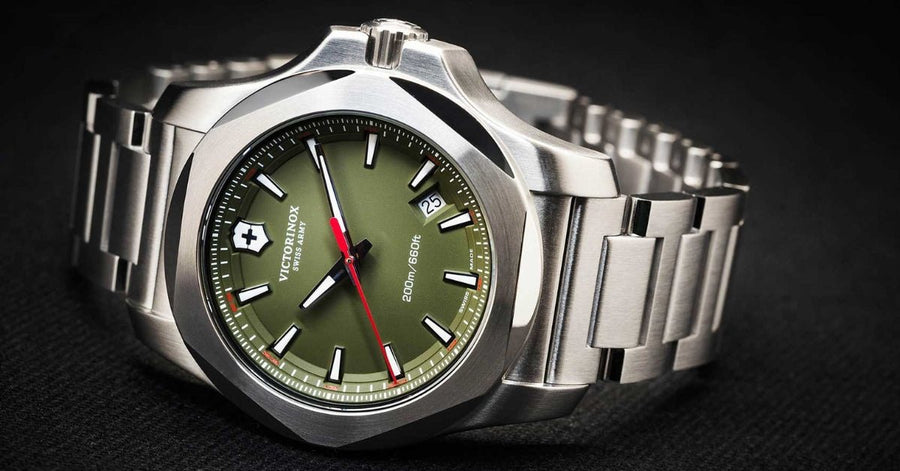
Dive watches. A rotating bezel and a 200- or 300-metre rating exist for a reason, and a leather strap quietly cancels that reason. If you own a diver and it lives on leather, you have decided not to dive with it. That is a legitimate choice — just make it knowingly.
Anything you wear on holiday. Sun, salt, sunscreen, pool water and sweat in one fortnight is the harshest fortnight a strap will ever have. This is the single best argument for owning a second strap rather than a second watch.
Sports and everyday chronographs. Not because they cannot take leather, but because they get worn in exactly the conditions leather is worst in.
The inverse is also true and worth knowing: a thin dress watch with a low water rating is not going swimming anyway, so its strap can be whatever suits it. Leather is the right answer there precisely because the question never comes up.
What to buy
Rubber, cut for your watch, in the right end shape. Two decisions and then you are done.
Curved-end suits rounded dive cases and cushion cases, where the case curves away at the lug and a flat cut would leave a visible gap. It runs 18 to 22mm in our range, which covers most sports watches including the odd widths most makers skip.
Straight-end suits conventional lugs with a visible gap between case and lug tips. Ours runs 20, 22 and 24mm with integrated quick-release spring bars, so you can swap it in seconds without tools — which matters more than it sounds when you are switching for a weekend and back again on Monday.
If you want something that reads as textile but survives water, sailcloth is the middle ground: the look of a woven strap in a construction built for weather.
And keep the leather for the days it makes sense. That is the point — not to replace it, but to stop asking it to do a job it was never built for.
Not sure of your size? The strap finder works by watch rather than by measurement.
Frequently asked questions
Can you swim with a rubber watch strap? Yes. Rubber is the correct material for swimming — it does not absorb water, stiffen or degrade, and it rinses clean.
Can you swim with a leather watch strap? You can, but it will shorten the strap's life considerably and the damage concentrates at the lug holes, which is where it holds the watch on.
Is salt water bad for a rubber strap? Not the swimming — the drying. Rinse it under a tap afterwards and salt is a non-issue.
What is the best watch strap for sweat? Rubber. It does not absorb sweat, it rinses in seconds, and it does not hold odour the way leather and fabric do.
Does a rubber strap make my watch waterproof? No. Water resistance comes from the case, crown and caseback. Check your watch's rating before swimming with it.
How often should I rinse my strap in summer? After every swim, and any day it has been near sunscreen or insect repellent. Otherwise a proper clean once a month.
Made for the conditions people actually wear watches in
Our rubber straps carry a lifetime warranty — which is a claim we can only make because the material genuinely handles salt, chlorine, sweat and sun rather than tolerating them. Shipping is free worldwide with no import costs, and more than 50,000 customers have re-strapped their watches with us.
Get one for the summer, keep the leather for the rest of the year, and both will last longer.