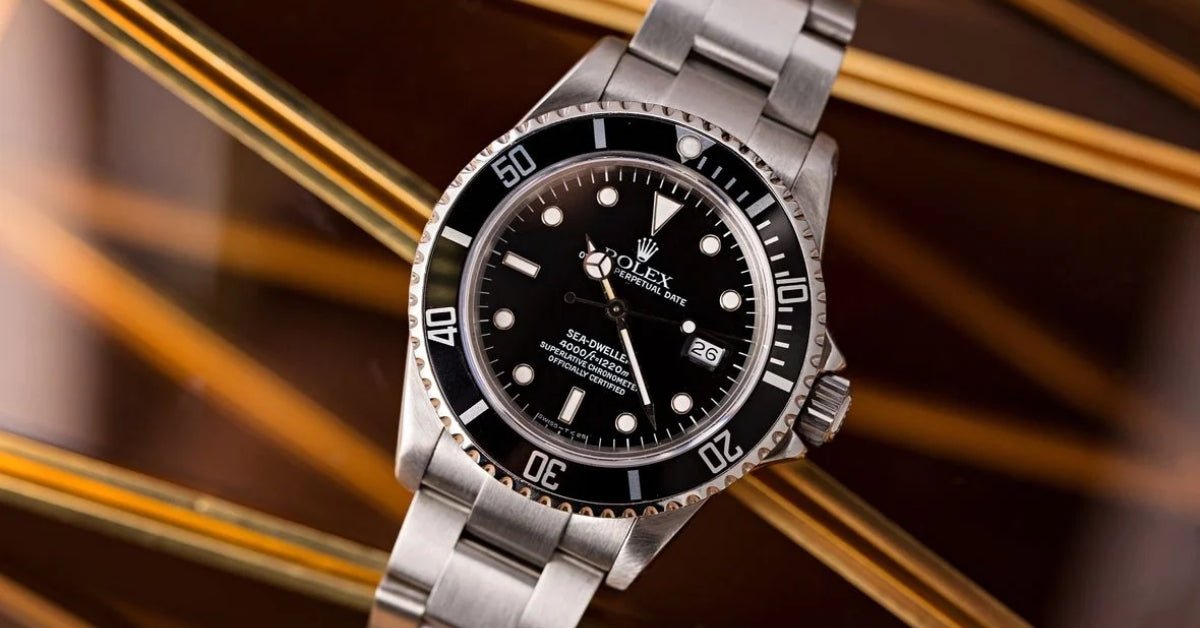
Collectors call it the "Triple Six," and it's the Sea-Dweller that dragged the whole line into the modern era. Introduced in 1978 and built until 1989, the 16660 took the original saturation diver and rebuilt its spine: a sapphire crystal in place of acrylic, a unidirectional bezel, the quickset caliber 3035, a larger helium escape valve — and a depth rating doubled to a frankly absurd 4,000 feet. It's a transitional reference in the best sense: vintage character on the outside, modern usability underneath, and a case built for actual professionals who wore these to work underwater.
Those watches are now thirty-five to nearly fifty years old, still tough as ever — and carrying original bracelets that aren't. This guide covers the fix: exactly which strap fits the 16660, and the best rubber options for wearing a professional tool like a professional tool again.
Which size fits the Sea-Dweller 16660?
The 16660 has a 40mm case with a 20mm lug width — the classic Sea-Dweller sizing it shares with its successor. On our Sea-Dweller rubber straps, simply select the 40mm option on the product page — that's the correct fit for the 16660's case, and it's the same selection its successor uses. Spring bars are included, and the drilled lugs on most examples make the swap especially easy at home.
Two quick routings so nobody orders wrong. The modern 43mm Sea-Dweller (126600 and the two-tone) takes the 43mm selection instead — covered separately in our Sea-Dweller 126600 guide. And the Deepsea models are a different case family entirely, with their own dedicated straps.
A short history of the 16660
The Sea-Dweller was born in 1967 from professional saturation diving — the first production watch with a helium escape valve — and for its first decade it meant the 1665. The 16660 arrived in 1978 as its replacement-in-waiting, and for about five years the two were built side by side while the new reference proved itself. Prove itself it did: sapphire crystal, one-way bezel, a bigger valve, quickset date, and 1,220 metres of water resistance in a case roughly 15mm tall, brushed on top with polished bevels down the flanks — bevels whose sharpness is still the first thing specialists check today.
The dials tell the reference's story in two acts. Early examples wear matte dials with painted tritium — the rarer, collector-favorite look — before the run switched to gloss dials with white gold surrounds, the exact moment the serious tool started becoming a luxury object. Every example says the same thing at six o'clock, though: 4,000 feet, in plain white text. The red lines of its Double Red predecessor were gone for good.
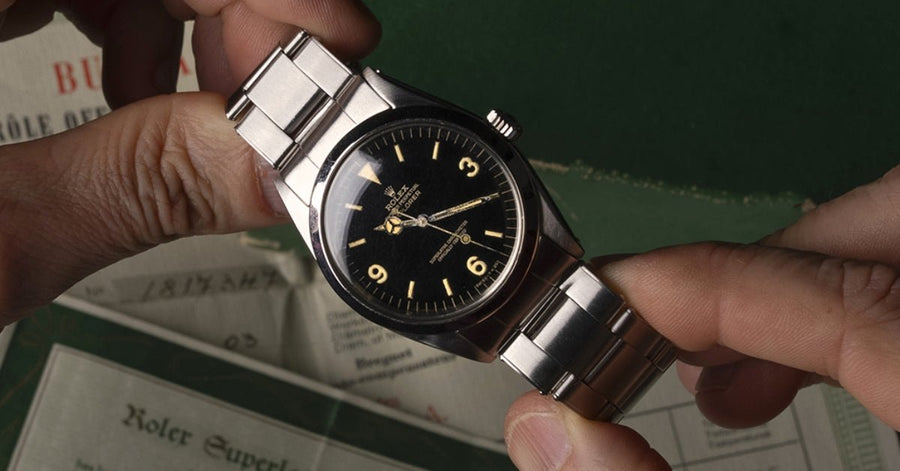
On the wrist end, the 16660 rode the Oyster bracelets of its era with the Fliplock diving clasp — and here's the part every owner already knows: specialists note that these vintage bracelets develop stretch over time, especially at the center links, and some rattle is simply part of an honest survivor. Stretch can't be undone, originality carries real value on a collectible reference, and replacement links are neither cheap nor "original" anymore. Which makes the math simple: the tightest bracelet is the one that stopped being worn today.
The best rubber straps for the Rolex Sea-Dweller 16660
Four picks, chosen for a matte-and-gloss black diver with history in its text.
1. Black — the saturation uniform. The black rubber strap is the most popular choice for this model, and on the Triple Six it's simply correct: black dial, black bezel, black rubber, zero decoration. It restores the working-diver character the reference was built with, shrugs off water and sweat the way a fifty-year-old bracelet no longer should, and quietly retires the Fliplock to the box. The daily answer.
2. Beige — tritium, matched. The beige rubber strap is the sleeper of the entire range on this reference. Decades-old tritium ages to warm cream — especially on the matte early dials — and beige rubber picks up that exact tone, giving the watch a sand-and-steel field look that feels like it aged together. On a patinated Triple Six, this is the pairing collectors stop to ask about.
3. Red — the red it retired. The 16660 is the direct descendant of the famous Double Red Sea-Dweller, yet it never wore a line of red text itself. A red rubber strap hands the bloodline its color back — bold against the black dial and bezel, unmistakably a diver, and a nod only Sea-Dweller people will catch. The most Triple Six thing you can do to a Triple Six.
4. Light blue — the ghost pick. Plenty of 16660 bezel inserts have faded toward soft grey-blue over the decades, and a light blue rubber strap is their perfect partner — cool, faded tones on a watch that's earned them. Even on a crisp black insert, light blue turns the 1,220-metre professional into a summer watch with a straight face.
Navy, green, brown and more live in the Sea-Dweller collection, all in the same 40mm selection. And if your Sea-Dweller is the original 1665 or the later 16600, we've covered both references in their own dedicated guides.
Retire the bracelet, not the watch
The 16660 was bought by people who used it — keep the tradition, lose the risk. Helvetus straps are built for a precise fit on the Sea-Dweller case, and every rubber strap comes with a lifetime warranty, free worldwide shipping and no import costs. Over 50,000 customers already trust Helvetus, a leading global brand for aftermarket watch straps. Box the Fliplock while it's still tight, give the transitional tool a strap built for the next forty years, and wear the Triple Six the way its first owners did — everywhere the water is.